
Keep the event in view
Describe the place, party and departure. Begin with what happened there, from helping locals to exposing a secret, freeing someone or causing chaos.
A place carries on
The party rides on.
The place keeps changing.
A return visit has a story.

Begin with what the party actually did
Follow welcome changes and difficult costs.
Describe the place, party and departure. Begin with what happened there, from helping locals to exposing a secret, freeing someone or causing chaos.
Prepare five stages of change, the people who feel them most and what awaits on return. Add hooks and practical tips for your table.
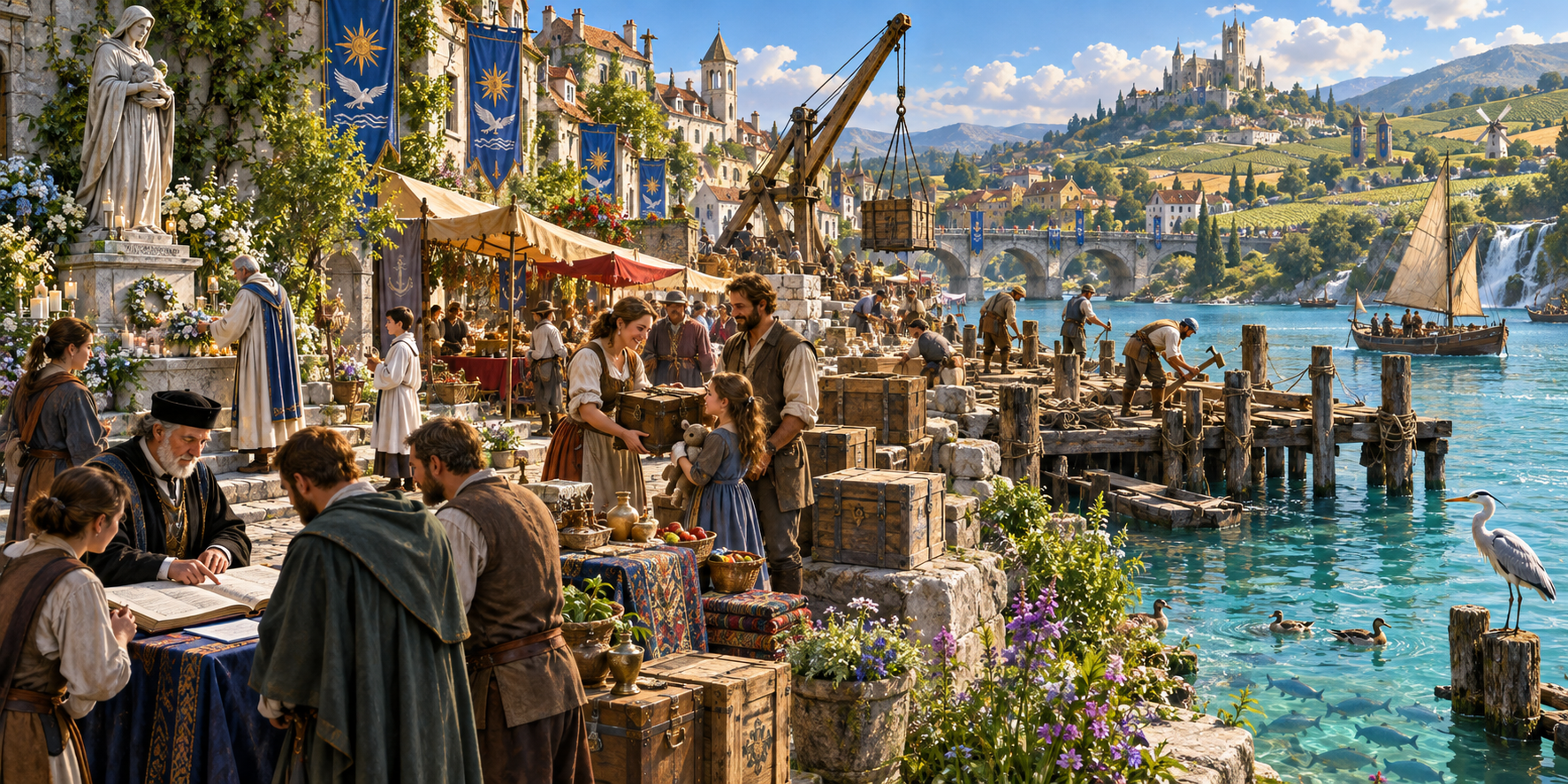
A riverside market and rebuilding quay
The illustration shows people discussing records beside a family, a shrine and market stalls. Workers rebuild a quay while cargo moves beside the river.
Choose whose lives carry the consequences: ordinary people, merchants, leadership, faith, the underworld, one family or the land itself.
Five moments in one place
Follow the consequences after the party leaves.
Describe the place, name the party members and explain how they left. Keep the established event beside the aftermath you prepare.
Begin with saving the place, killing someone important, taking something valuable, freeing someone, destroying something, exposing a secret, helping locals or causing chaos.
Choose barely a ripple, a local stir, real consequences, lasting change, a transformed place or a change that echoes across the land. Select the tone.
Prepare the first signs of change. Show what people notice as the place begins to respond to the party’s departure.
Follow developing consequences after one week and one month. Review welcome improvements and difficult costs together.
Describe what the place becomes after six months and one year. Keep those later stages beside the original event when refining the timeline.
Choose ordinary people, merchants, leadership, faith, the underworld, one family or the land itself as the focus of the consequences.
Prepare what greets the party if they return. Give players a changed place and leave their response to them.
Add two campaign hooks, two practical tips and a private Dungeon Master note. Include other events, things to avoid and context for your preparation.
Lock, change and edit individual sections. Save versions, reopen an aftermath or duplicate it to explore a variation. Copy, download JSON or print a reviewed audience view.
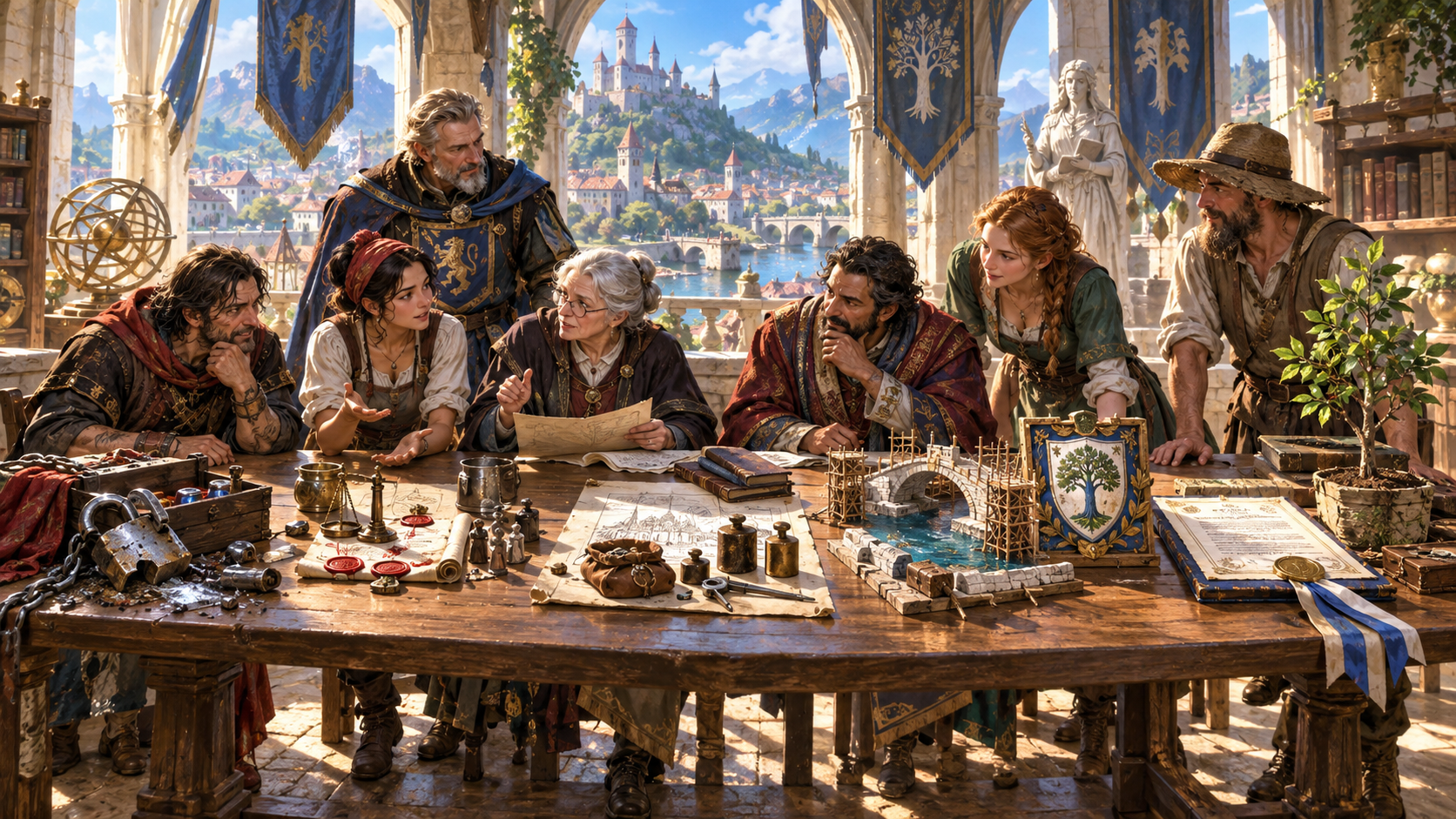
Companions discussing records and a miniature bridge
The illustration shows companions gathered around records, sketches, tokens, a miniature bridge and a tree. A town and river appear through the arches behind them.
Set the place, party, departure, reach and tone. Add what happened, affected people and private context, then review all five stages of change.
From departure to a useful return scene
Prepare the changes your table can explore.
Name the place and party. Explain what they did and how they left, with the established facts you want beside the aftermath.
Select the scale of consequences, from barely a ripple to echoes across the land. Choose who feels it most and add other events.
Read the changes after one day, one week, one month, six months and one year together. Refine the timeline against your original event and context.
Review what greets the party, the two campaign hooks, practical tips and private note. Choose the material to share and let players decide their response.

Returning to a changed town
The illustration shows returning adventurers meeting a messenger with sealed letters. Locals greet them beside stalls, children plant a sapling, and a damaged building stands beyond the quay.
Prepare improvements and costs together. Describe the return scene, affected people and campaign hooks, leaving the party’s response to your players.
Keep your aftermath beside the original event
Prepare a useful record of the place.
Lock, change and edit the sections you choose. Review the whole timeline and original event together after refining a stage.
Save an aftermath and reopen it with its stages, affected people, return scene and hooks. Keep versions or duplicate a result to explore a variation.
Prepare the full Dungeon Master dossier or player-facing return brief. Review private notes, context and custom edits before sharing.
Copy your chosen material, export the aftermath as JSON or print the version you want beside your campaign preparation.
Your workspace and related tools
Open your tools through your VISINVOKE account.

Open After We Left Generator in DCC. Get the desktop workspace through your account installer page.
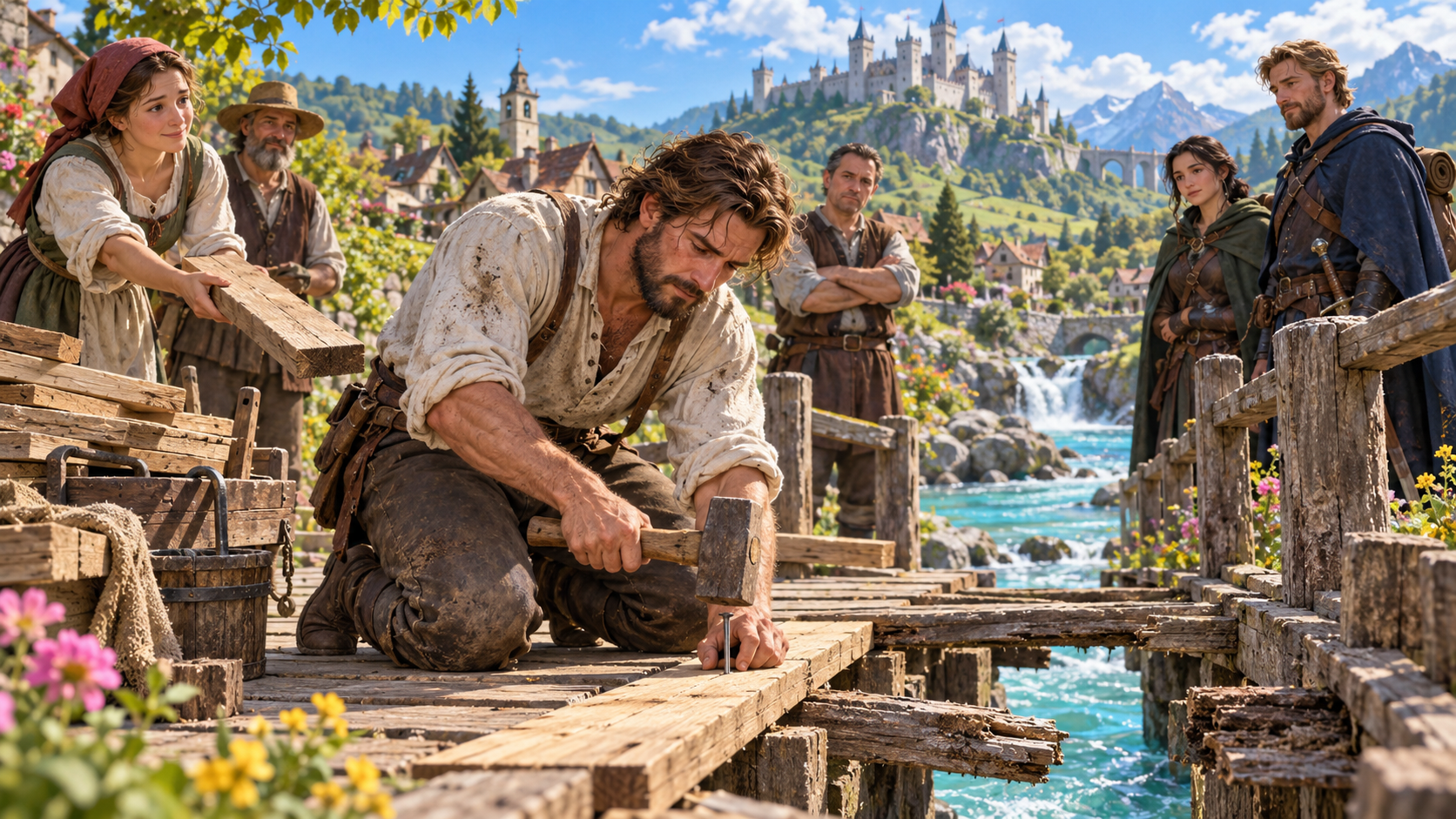
Prepare a separate story about making amends, its cost and how others respond. Use it alongside a return to a changed place.
Product illustrations show a changed riverside town, the people affected, a timeline discussion and a return with mixed consequences.
Questions and answers
Make a return visit feel connected to the adventure.
It follows the wider consequences inside one place after the party leaves, across one day, one week, one month, six months and one year.
Describe the place, name the party members and how they left, choose how far the consequences reach and select a tone.
Choose what the party did and who feels it most, from ordinary people and merchants to a family or the land. Add other events, things to avoid and private context.
The place, party, departure, original action, reach and tone, all five stages of change, affected people, a return scene, two campaign hooks, practical tips and a private note.
Save an aftermath and reopen it, keep versions or duplicate a result. Copy the Dungeon Master dossier or player-facing return brief, download JSON or print. Review private notes, context and custom edits before sharing.
Open After We Left Generator from the Generators collection in VISINVOKE Desktop Control Centre. Create an account or sign in and get DCC through your account installer page.
Continue in VISINVOKE
Create an account or sign in. Get Desktop Control Centre through your account installer page and open After We Left Generator.
Keep your aftermaths and return scenes beside your campaign preparation.